Every West Coast Treez product is independently tested by licensed third-party laboratories before it reaches you. This page provides access to our batch-specific Certificates of Analysis (COA) and explains what our testing standards mean for you as a consumer.
West Coast Treez Lab Results & Certificate of Analysis (COA)
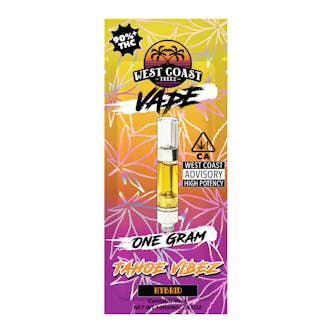
Transparency is at the core of everything we do. West Coast Treez does not sell a single product without independent third-party laboratory verification. Our COA documents are available for every batch, verifying potency, purity, and safety. Scan the QR code on your product packaging to access the batch-specific COA, or browse our testing standards below.
How to Verify Your Product’s Lab Results
- Find the QR code on the bottom or side of your West Coast Treez product packaging
- Scan with any smartphone camera — no app required
- You’ll be directed to the batch-specific COA document for your exact product
- Confirm the batch number on the COA matches the batch number on your packaging
What We Test For
Cannabinoid Potency Profile
Every batch is tested for the full spectrum of cannabinoids using High-Performance Liquid Chromatography (HPLC). Our potency panel includes: Total THC (THC + THCA × 0.877), Total CBD (CBD + CBDA × 0.877), CBG (cannabigerol), CBN (cannabinol), CBC (cannabichromene), THCV (tetrahydrocannabivarin), and CBDV (cannabidivarin). Results are reported as percentage by weight.
Typical West Coast Treez potency ranges by product type: Flower (19–29% total THC), Vape Cartridges (82–91% total THC), Disposable Vapes (85–92% total THC), Live Resin (75–88% total THC), Wax/Shatter (76–92% total THC), Pre-Rolls (18–26% total THC).
Terpene Analysis
Terpene analysis uses Gas Chromatography–Mass Spectrometry (GC-MS) to identify and quantify individual terpene compounds. Our panel tests for 20+ terpenes including: Myrcene, Limonene, Caryophyllene, Linalool, Pinene (α and β), Terpinolene, Ocimene, Humulene, Bisabolol, Nerolidol, Geraniol, and Camphene. Terpene content typically ranges from 1.8–4% in flower and 1.8–3.5% in vape products, and 4–7% in live resin.
Pesticide Screening
We test for the state-mandated pesticide panels in California, Oregon, and Washington — some of the most comprehensive in the industry. Our pesticide screening covers 66+ compounds including organophosphates, pyrethroids, carbamates, and chlorinated pesticides. All West Coast Treez products must pass with non-detectable or below action-level results before distribution. We do not sell any product with pesticide residues above state action levels.
Heavy Metals Testing
Heavy metals testing uses Inductively Coupled Plasma Mass Spectrometry (ICP-MS) to detect trace elements at parts-per-billion sensitivity. We test for: Lead (Pb), Arsenic (As), Cadmium (Cd), and Mercury (Hg). All results must fall below state action levels. Cannabis is a bioaccumulator — it absorbs heavy metals from soil — which is why heavy metals testing is critical for consumer safety. Our farming partners use clean, tested soils free from industrial contamination.
Residual Solvent Analysis
For vape cartridges, concentrates, and other extracted products, residual solvent testing ensures that hydrocarbon extraction solvents (butane, propane, hexane) or CO₂ extraction byproducts are removed to below state safety thresholds. Our extraction partners use vacuum purging and verified post-processing protocols. Residual solvent levels in all West Coast Treez concentrate products are well below California, Oregon, and Washington state action levels.
Microbial Contamination Testing
Microbial testing screens for harmful bacteria, mold, and fungi that can pose health risks, especially for immunocompromised consumers. We test for: Total Aerobic Count, Total Yeast and Mold Count, Coliforms, E. coli, Salmonella, and Aspergillus (four species: A. fumigatus, A. flavus, A. niger, A. terreus). All products must achieve passing results before release.
Mycotoxin Screening
Mycotoxins are toxic compounds produced by mold. West Coast Treez products are screened for Aflatoxins (B1, B2, G1, G2) and Ochratoxin A — the mycotoxins of primary concern in cannabis products. Our cultivation and processing partners maintain controlled humidity environments to prevent mycotoxin-producing mold growth, and every batch is confirmed mycotoxin-free before distribution.
Our Testing Partners
West Coast Treez works exclusively with state-licensed, ISO/IEC 17025-accredited third-party cannabis testing laboratories in California, Oregon, and Washington. We do not use in-house testing for compliance purposes. Third-party independence ensures results are unbiased and reflect true product composition. All labs we work with participate in state proficiency testing programs to verify their accuracy and precision.
Understanding Your COA
A Certificate of Analysis (COA) is the official laboratory document reporting all test results for a specific batch of cannabis product. Here is how to read key sections of your West Coast Treez COA:
- Batch Number — Unique identifier linking this COA to your specific product package. Verify it matches your packaging.
- Sample Date — Date the sample was collected. COAs are batch-specific, not product-line general.
- Total THC % — The activated THC percentage after decarboxylation. This is the potency number that matters for effect.
- Total Terpenes % — Combined percentage of all terpene compounds. Higher terpene content generally means more complex flavour and aroma.
- Pass/Fail Results — Each safety test (pesticides, metals, microbials, solvents) shows Pass or Fail with individual compound results listed below.
- Lab Signature — ISO/IEC 17025-accredited laboratory analyst signature certifying the results.
Frequently Asked Questions — Lab Testing
Why is third-party lab testing important?
Third-party testing by an independent laboratory provides unbiased verification of product contents and safety. Unlike in-house testing, third-party labs have no financial incentive to misreport results. State-licensed labs must meet ISO/IEC 17025 accreditation standards, participate in proficiency testing, and submit to regulatory oversight — providing an additional layer of consumer protection beyond brand claims alone.
What does “non-detectable” mean on a COA?
“Non-detectable” (ND) or “below LOQ” (Limit of Quantification) on a COA means the laboratory’s instruments could not detect the specified compound at or above the threshold of reliable measurement. For pesticides and heavy metals, ND results mean the compound is either completely absent or present at such infinitesimal levels that the best available scientific instruments cannot measure it — effectively zero.
How often are products tested?
Every harvest batch and every production run of extracted products undergoes testing before release. West Coast Treez does not use “representative testing” across multiple batches — each batch is independently tested. This means the COA you access via QR code reflects your exact product batch, not a similar product from a different harvest.
Recent Comments